
Fixate Kit
A wearable tonometer kit that makes eye pressure testing feel steady.
Duration
12 weeks
Industry
Home Appliances
Skills
Solidworks, Keyshot, Figma
Fixate Kit
A wearable tonometer kit that makes eye pressure testing feel steady.
Duration
12 weeks
Industry
Home Appliances
Skills
Solidworks, Keyshot, Figma
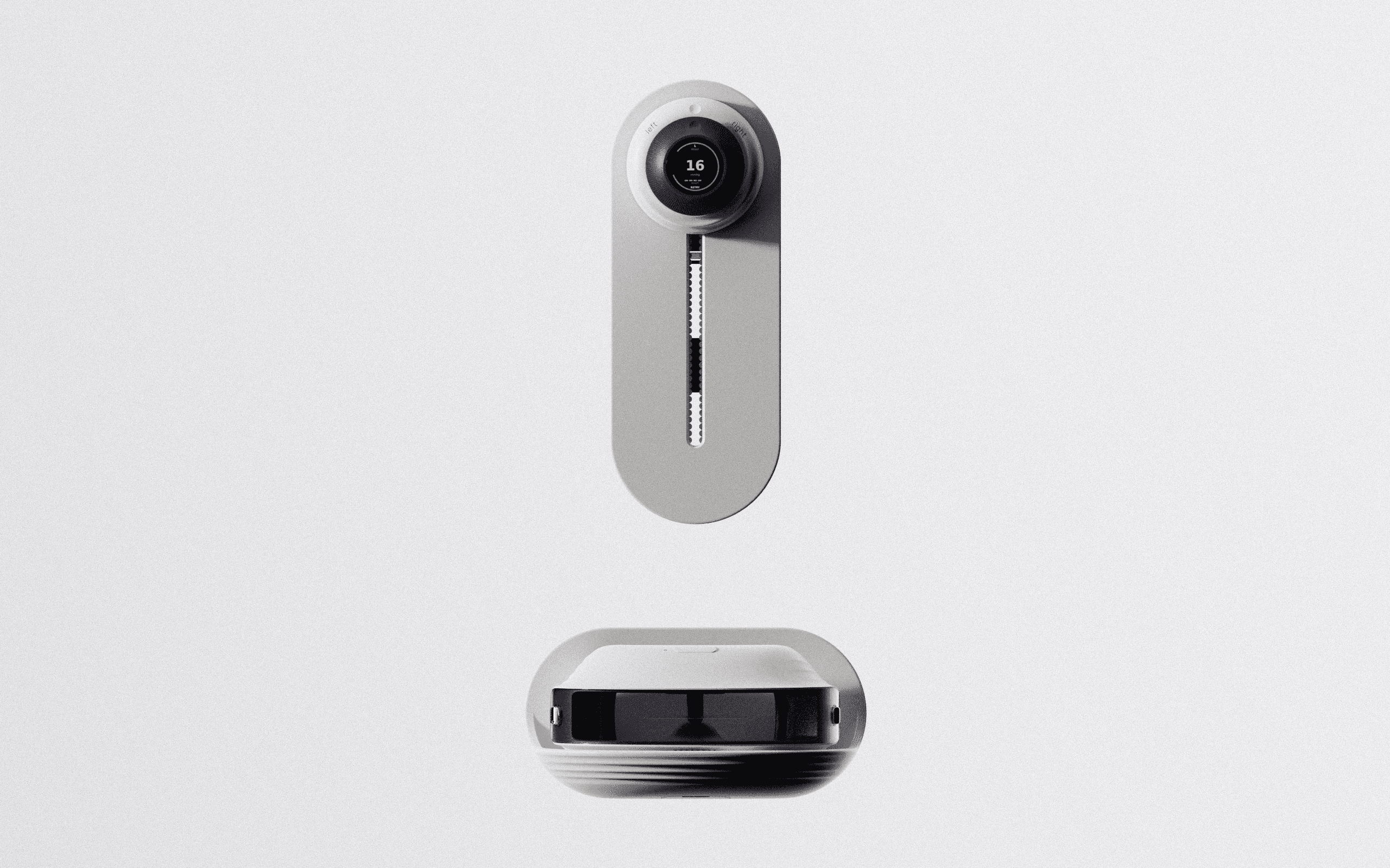


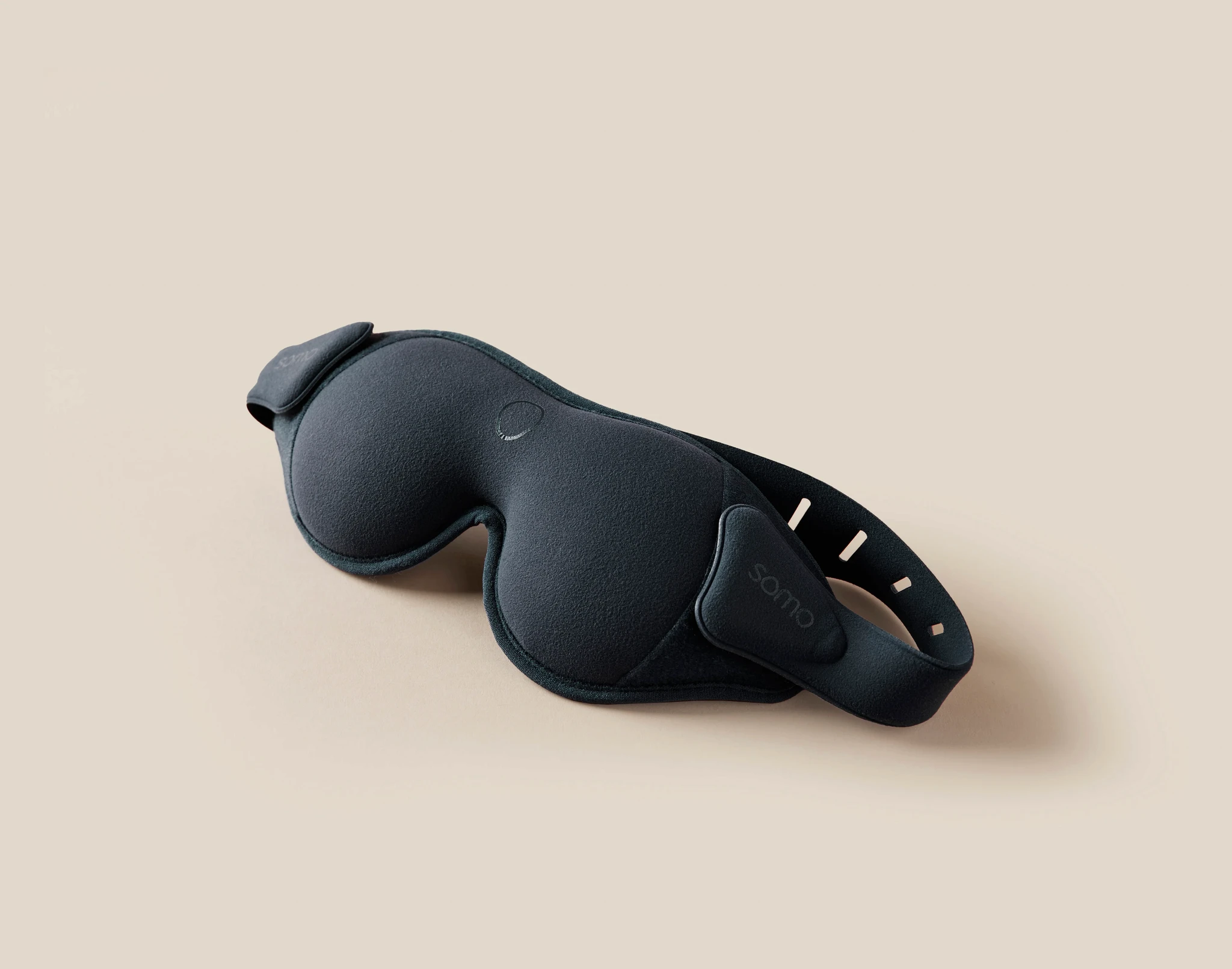
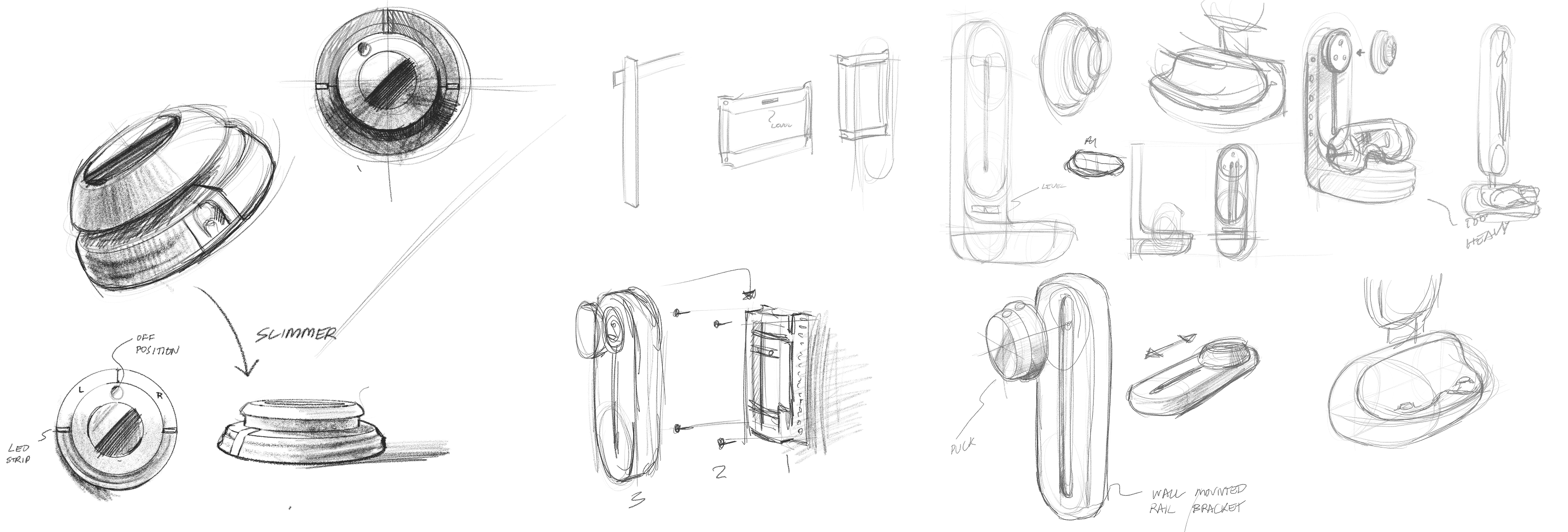
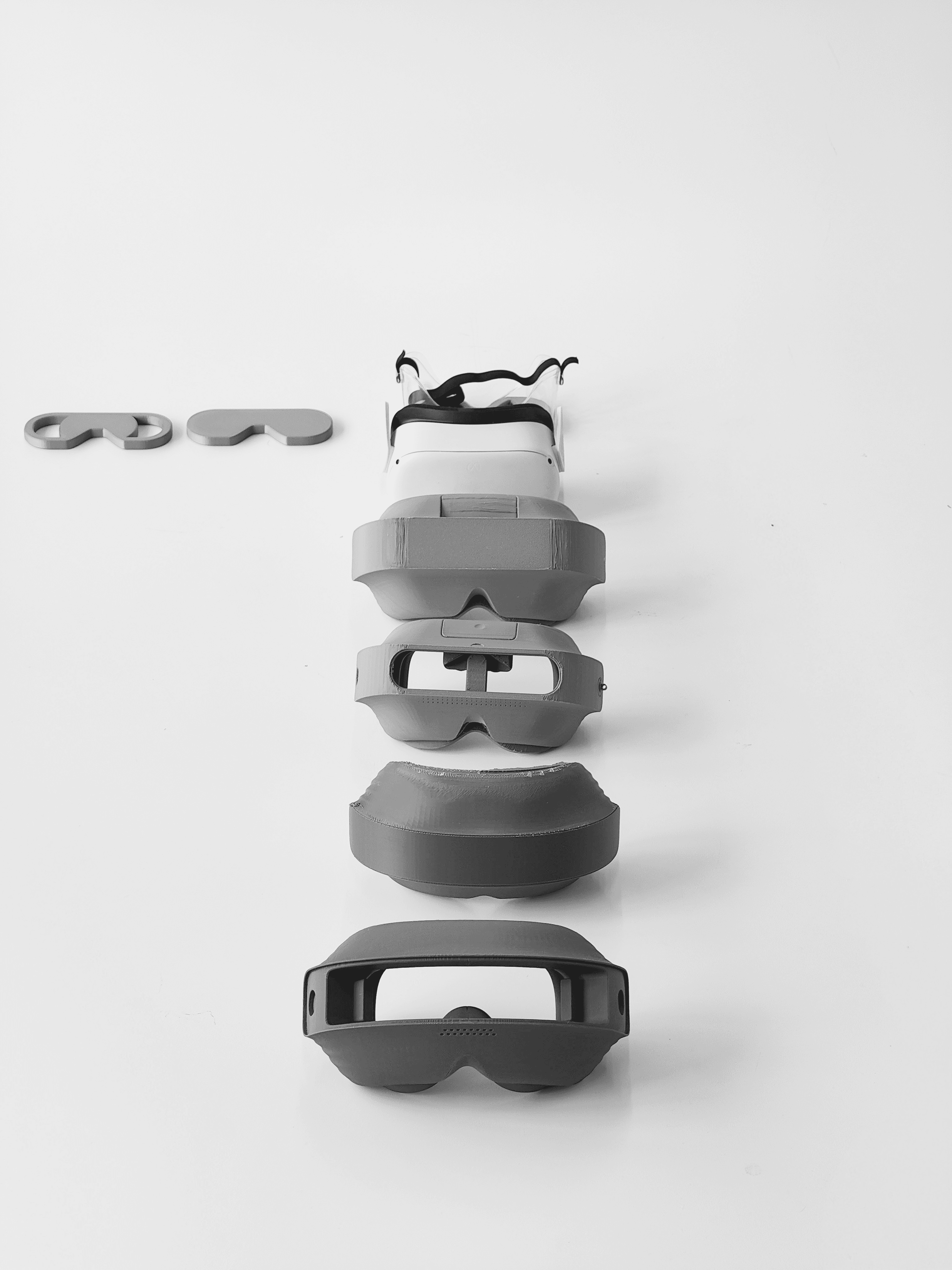
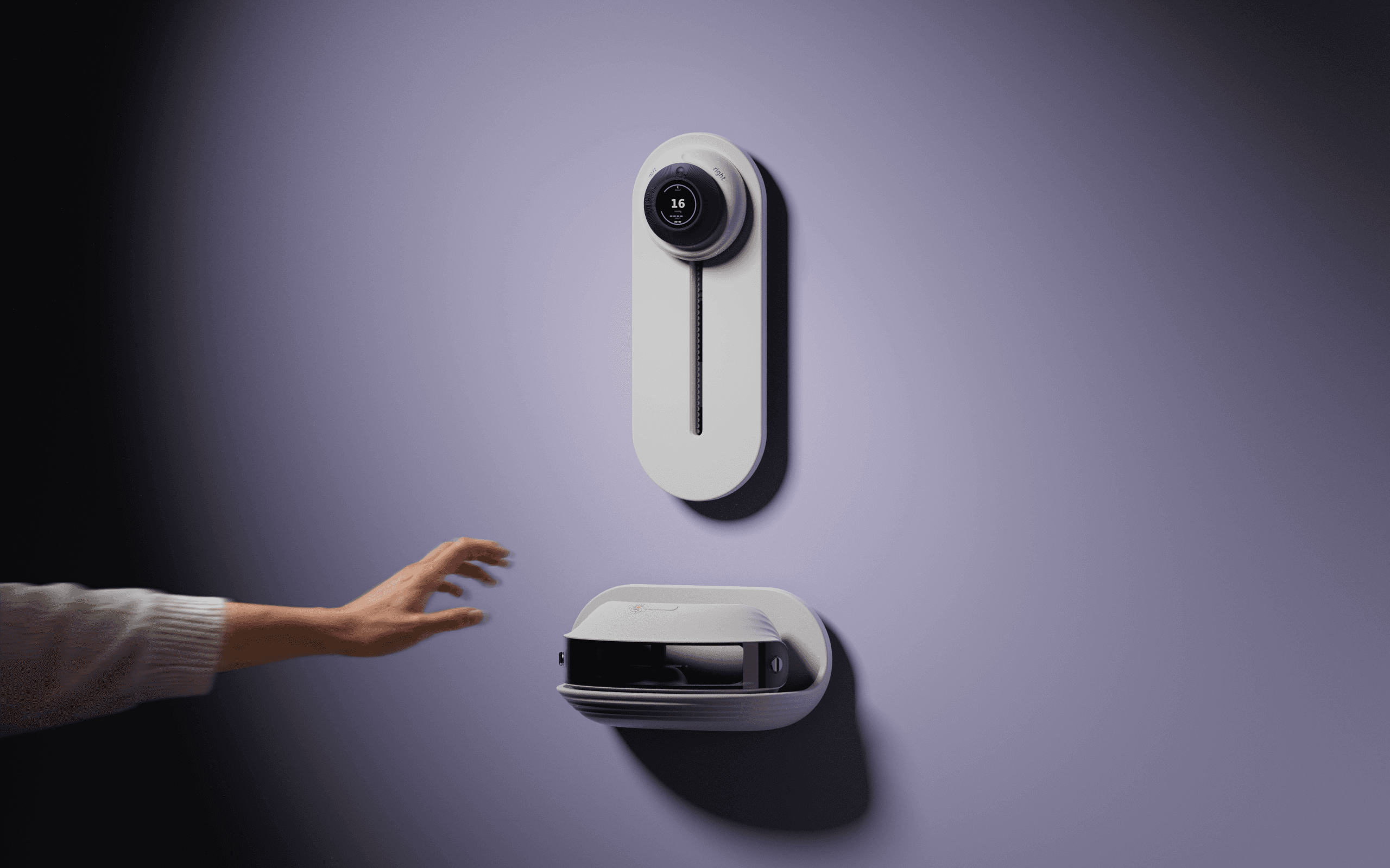
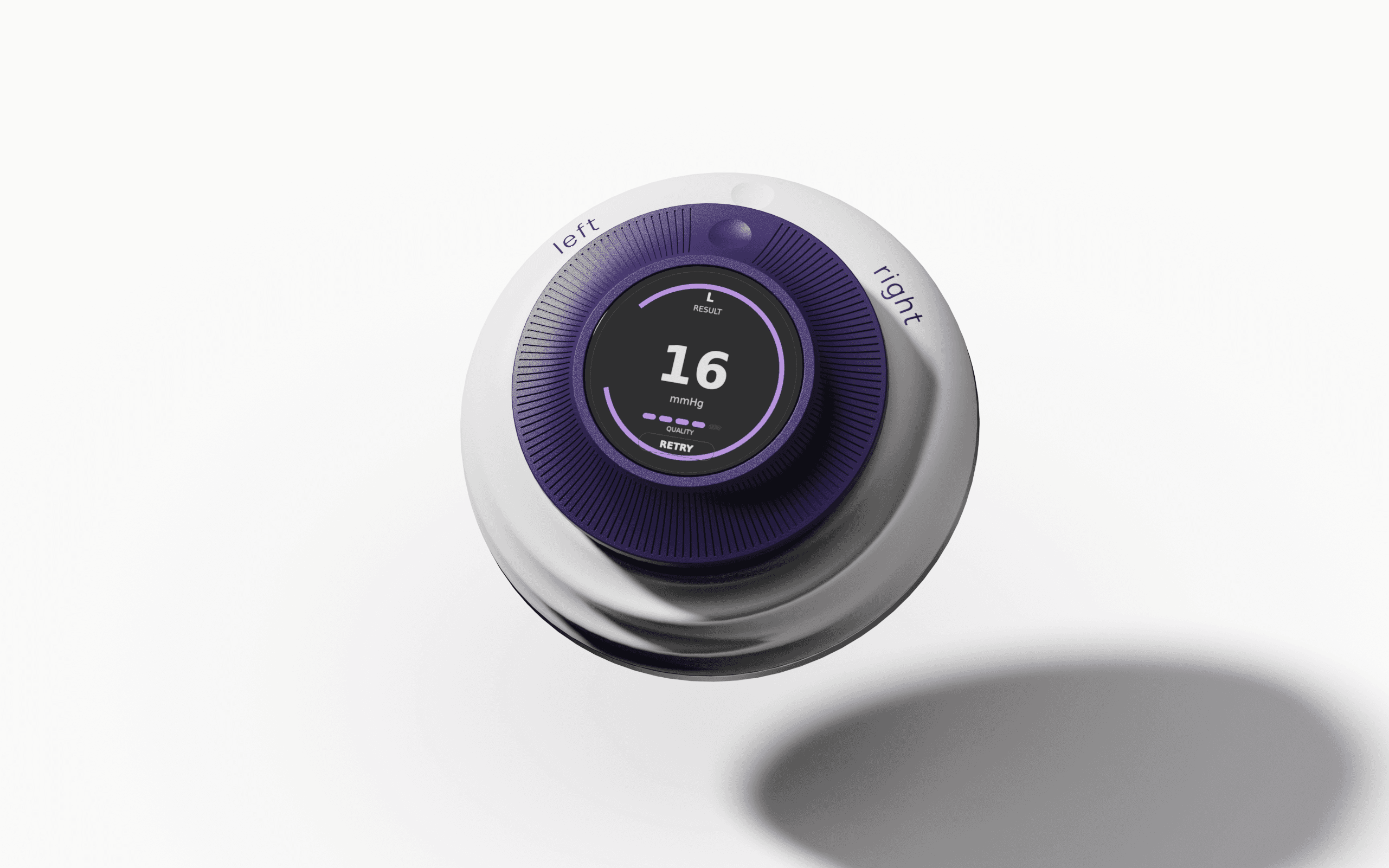
This is a three part system. The headset stabilizes positioning at the face, the puck dial produces results through focusing on it, and the wall mount keeps the kit charged and ready between patients.
This is a three part system. The headset stabilizes positioning at the face, the puck dial produces results through focusing on it, and the wall mount keeps the kit charged and ready between patients.
Who’s this for?
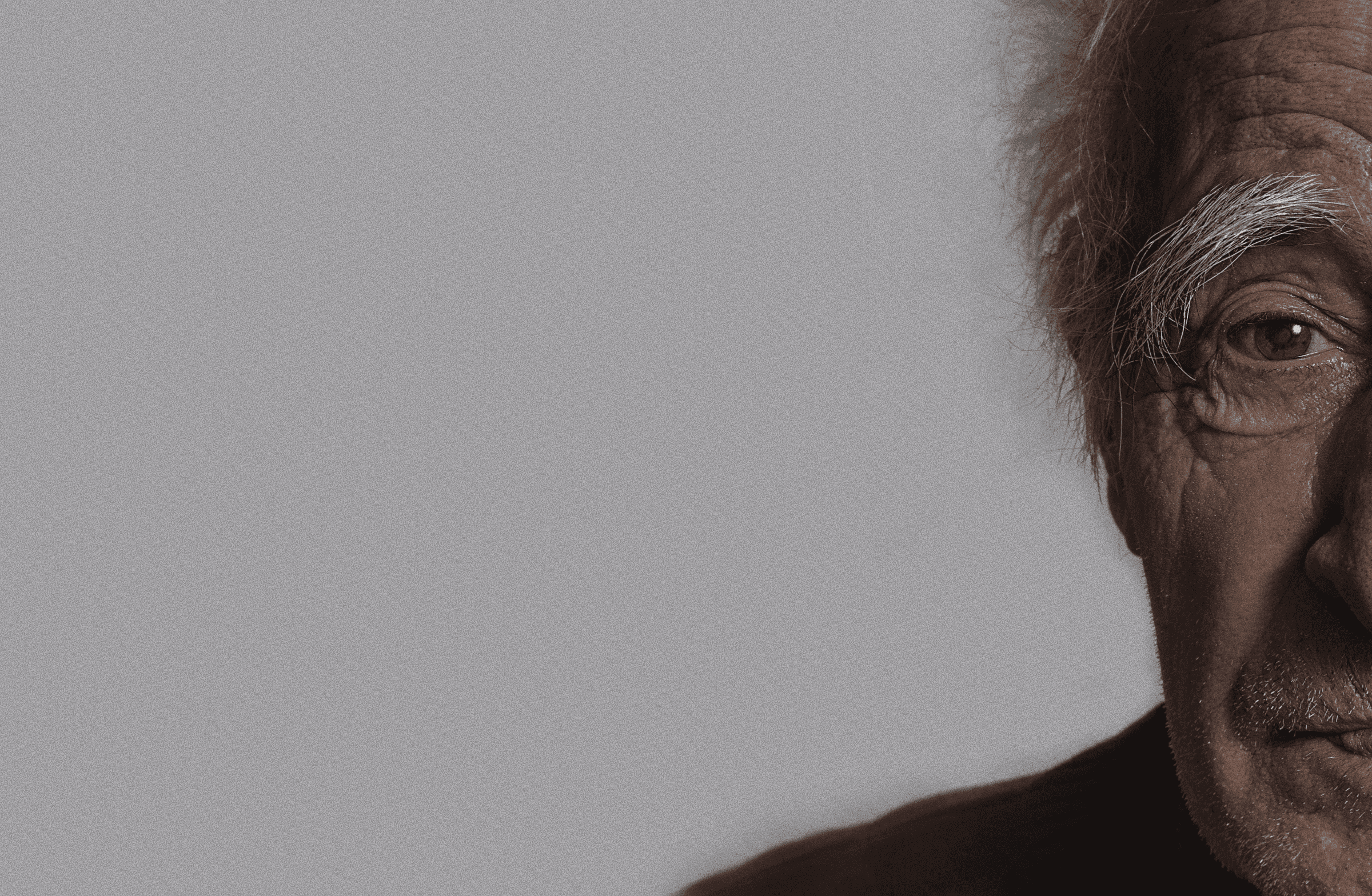
Intraocular pressure, or IOP, is checked routinely to monitor glaucoma risk and other eye conditions.
These exams often happen in tight rooms and busy clinics, where speed matters and patient comfort is easy to lose.
Who’s this for?
Intraocular pressure, or IOP, is checked routinely to monitor glaucoma risk and other eye conditions.
These exams often happen in tight rooms and busy clinics, where speed matters and patient comfort is easy to lose.
Who’s this for?
Intraocular pressure, or IOP, is checked routinely to monitor glaucoma risk and other eye conditions.
These exams often happen in tight rooms and busy clinics, where speed matters and patient comfort is easy to lose.
A simple measurement, in theory.
A simple measurement, in theory.
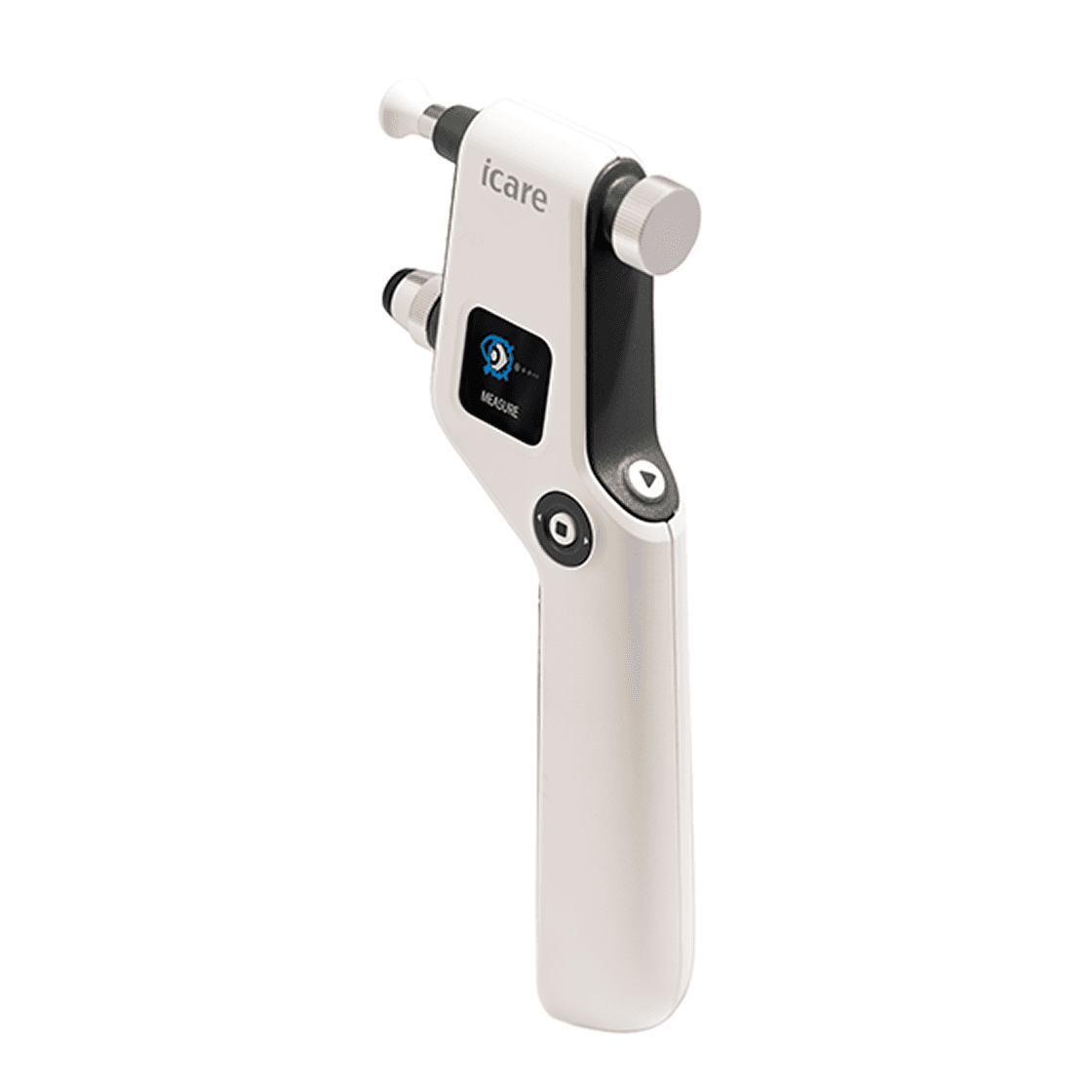
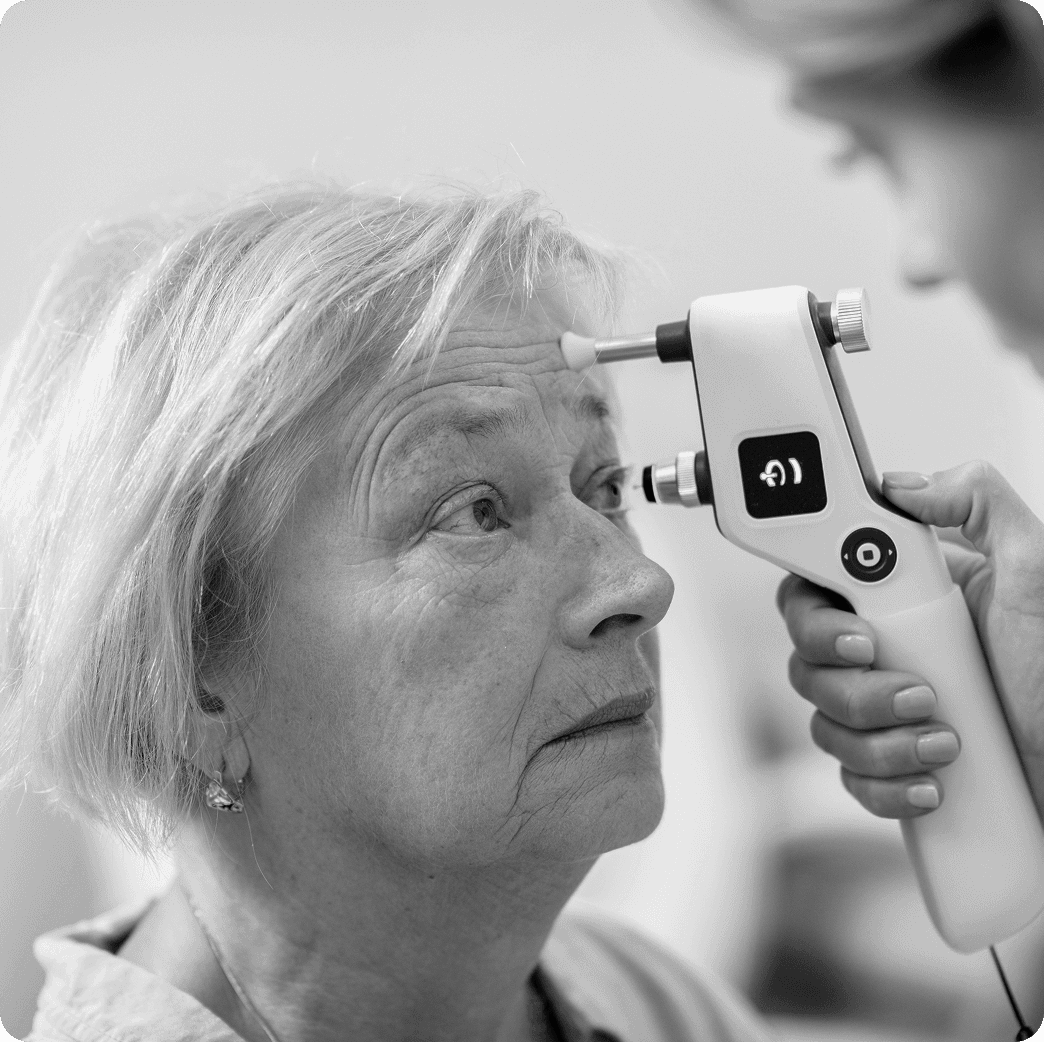
A rebound tonometer estimates IOP by gently tapping the cornea with a tiny disposable probe. The device measures how the probe decelerates and rebounds on contact, then converts that motion into an IOP reading.
A rebound tonometer estimates IOP by gently tapping the cornea with a tiny disposable probe. The device measures how the probe decelerates and rebounds on contact, then converts that motion into an IOP reading.
The hardest part is the moment before.
The hardest part is the moment before.
A reading can take seconds, but the eye is protective by default. Blinking, pulling back, and flinching can take over even when contact is brief. That turns a simple check into repeats, variation, and a growing sense of bracing for impact.
A reading can take seconds, but the eye is protective by default. Blinking, pulling back, and flinching can take over even when contact is brief. That turns a simple check into repeats, variation, and a growing sense of bracing for impact.
How might we make eye pressure testing feel calm and controlled, so patients stay ready and clinicians get consistent readings?
How might we make eye pressure testing feel calm and controlled, so patients stay ready and clinicians get consistent readings?
Design Constraints
Design Constraints
It has to feel safe before it works.
It has to feel safe before it works.
Patients should not feel watched or corrected.
Patients should not feel watched or corrected.
It needs to be able to withstand the clinic system.
It needs to be able to withstand the clinic system.
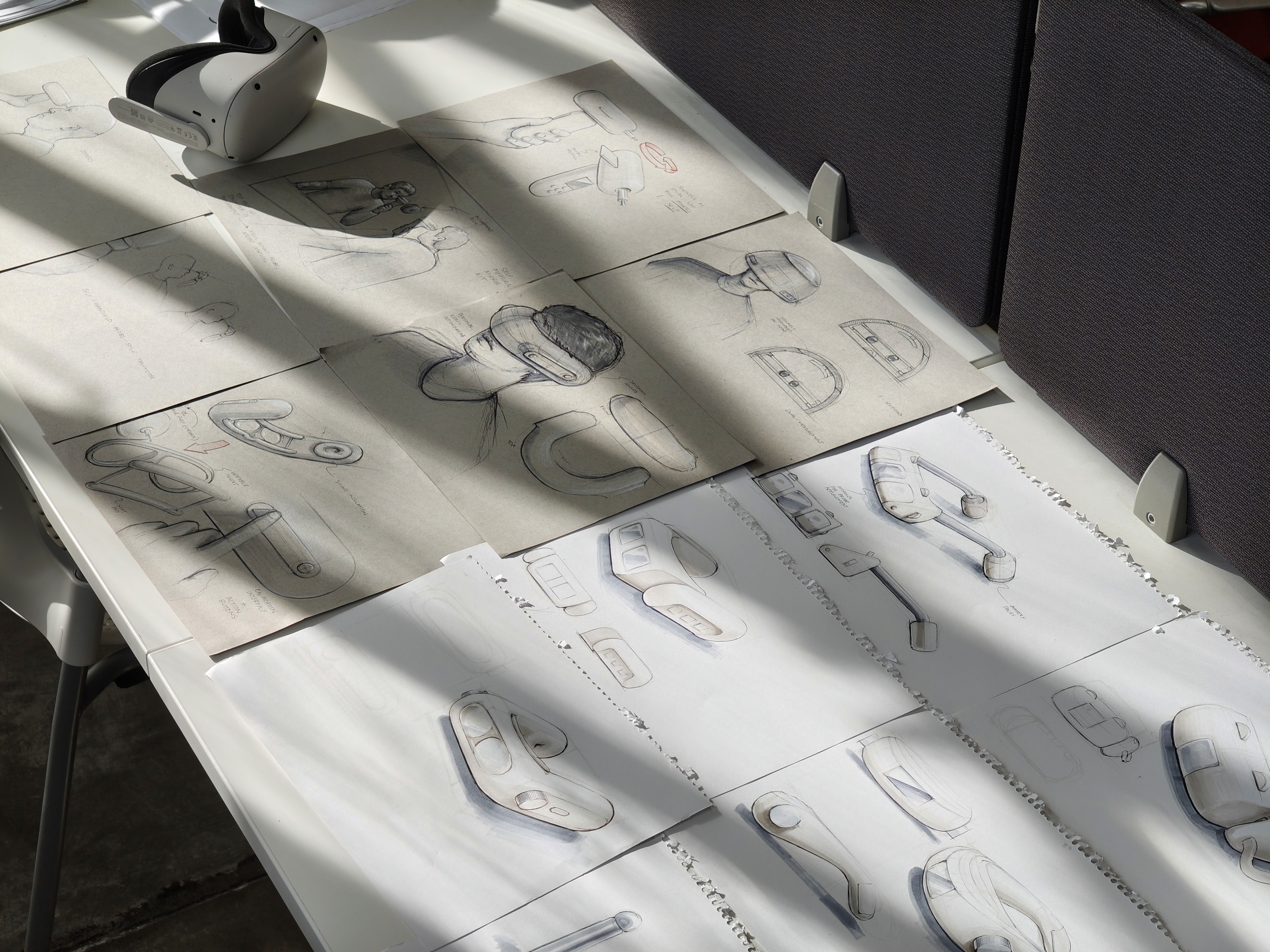
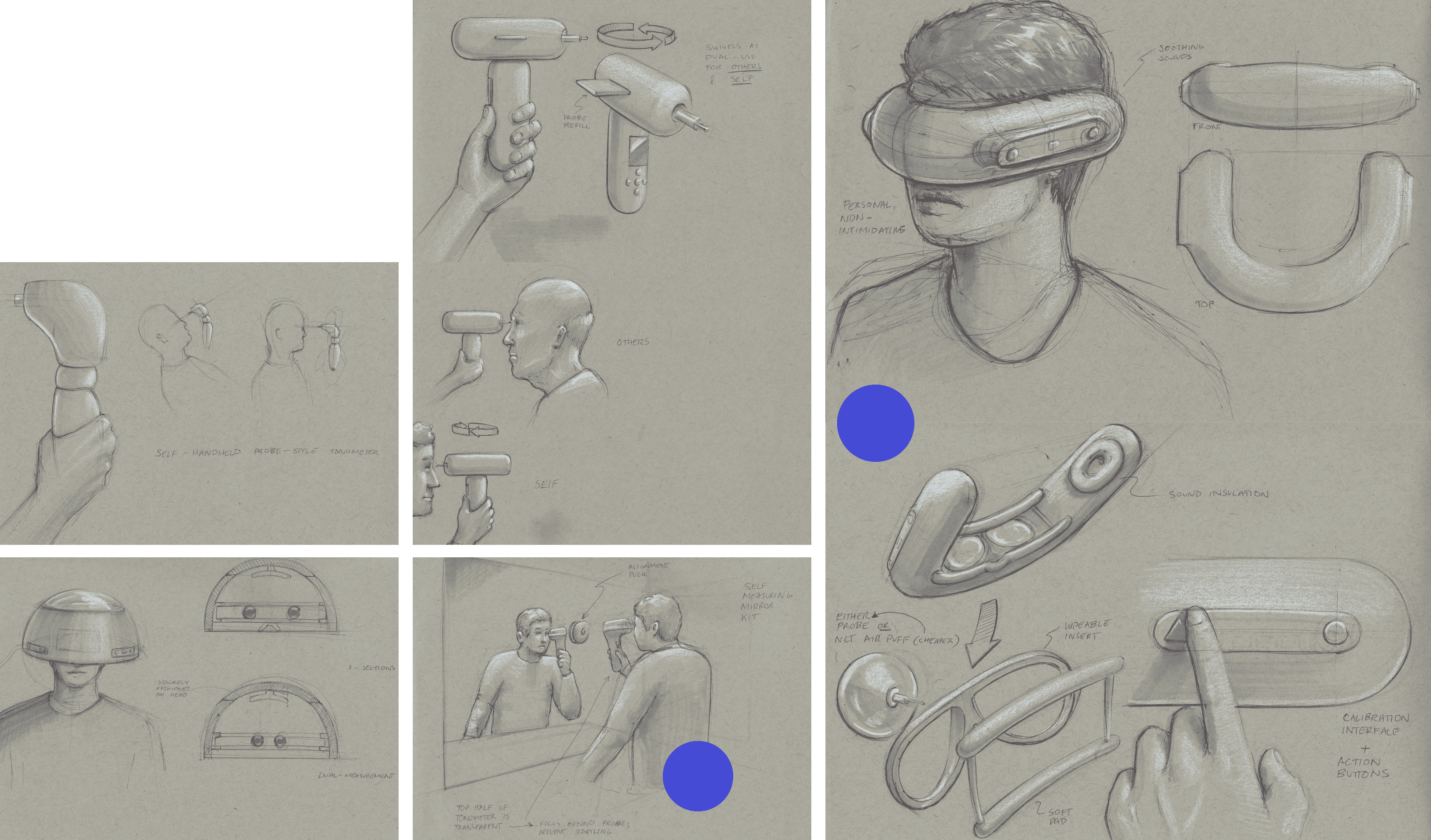
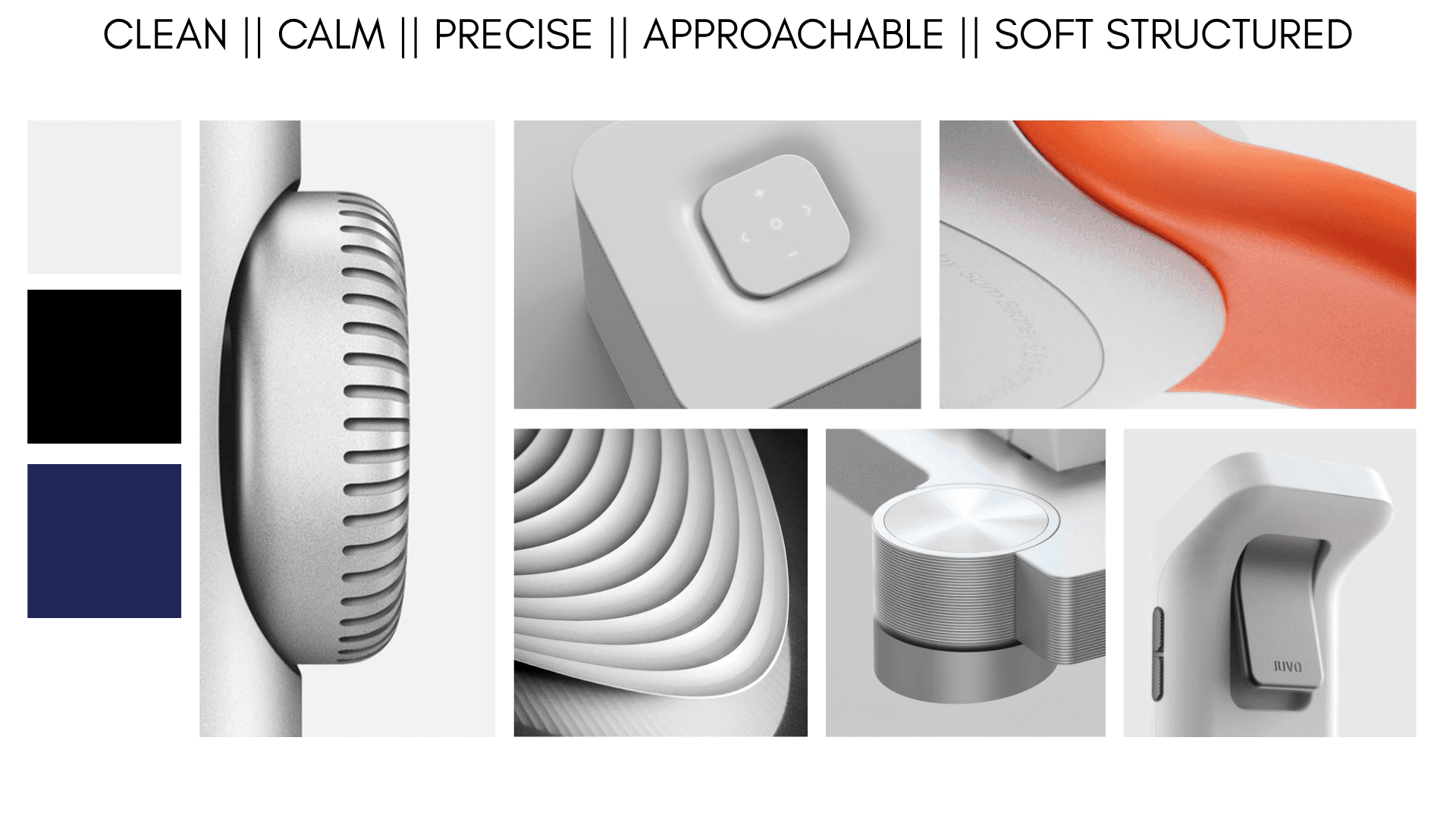
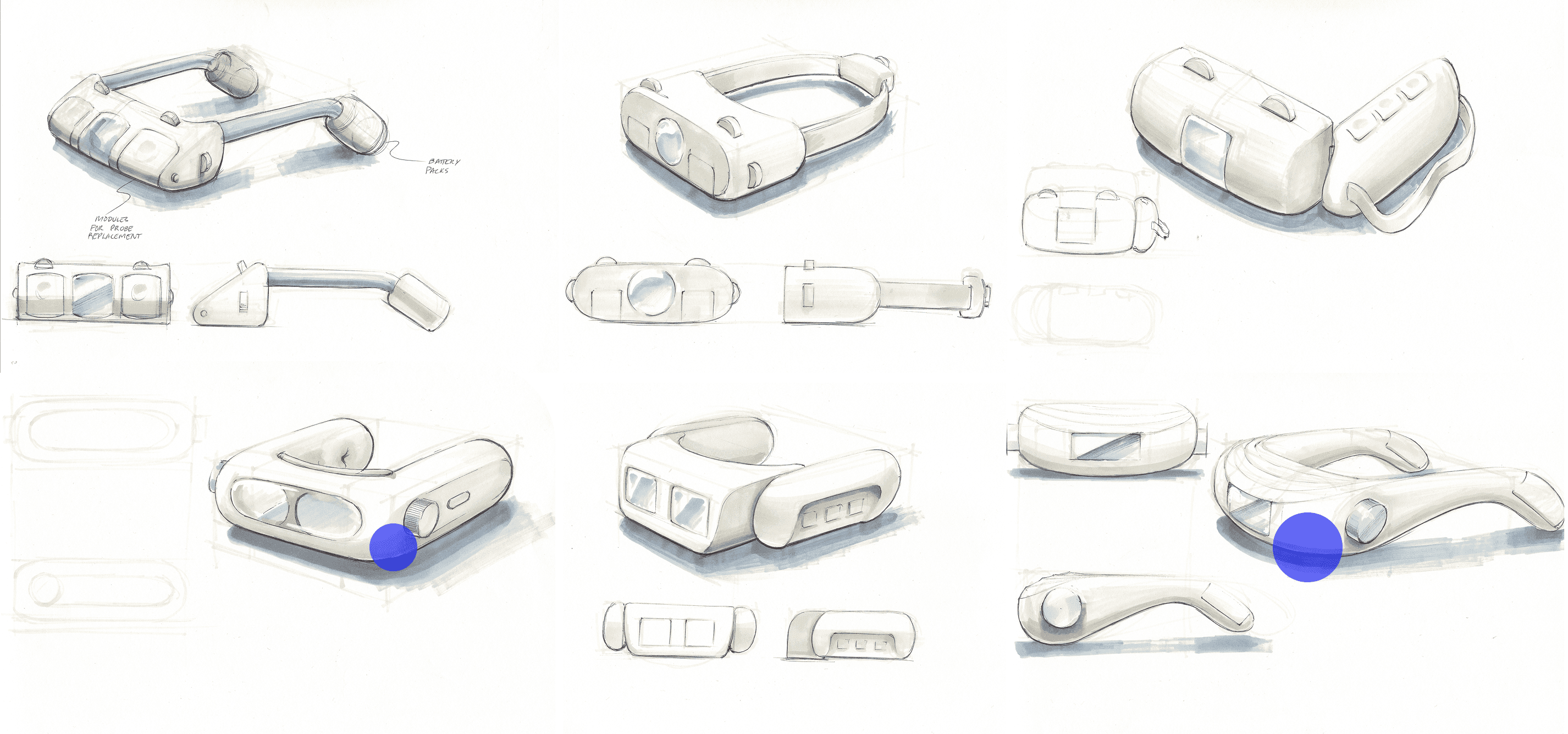
Fixate Tonometer
Eye pressure testing that feels steady, not startling.
Fixate Tonometer
Eye pressure testing that feels steady, not startling.
Fixate Tonometer
Eye pressure testing that feels steady, not startling.
Positioning is
intentional and secure.
Positioning is
intentional and secure.
A fixed relationship between face and measurement setup creates a repeatable starting condition and reduces the need for constant repositioning.
A fixed relationship between face and measurement setup creates a repeatable starting condition and reduces the need for constant repositioning.


Testing action is away from the eye,
making it deliberate.
Testing action is away from the eye,
making it deliberate.
Testing action is away from the eye,
making it deliberate.
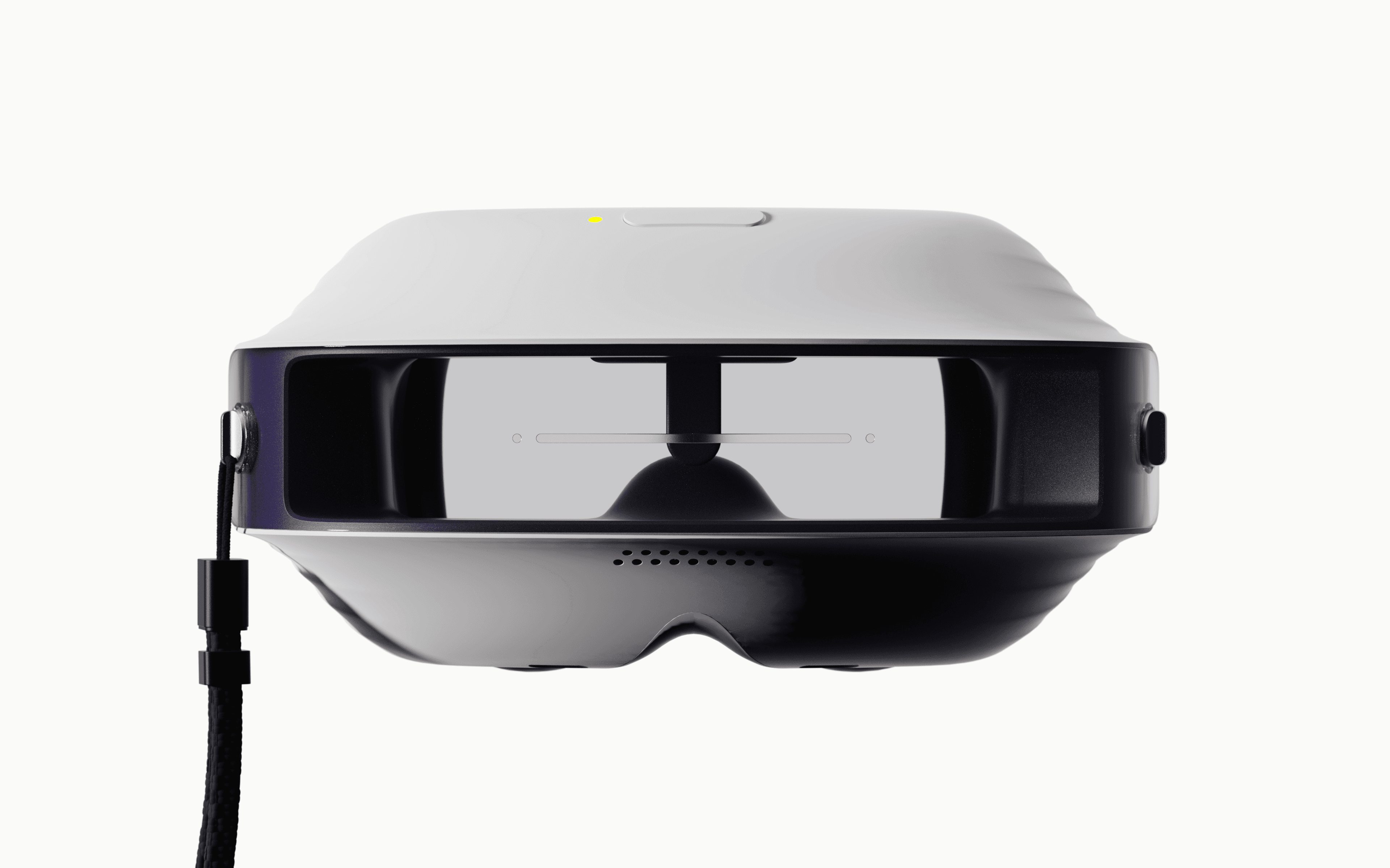
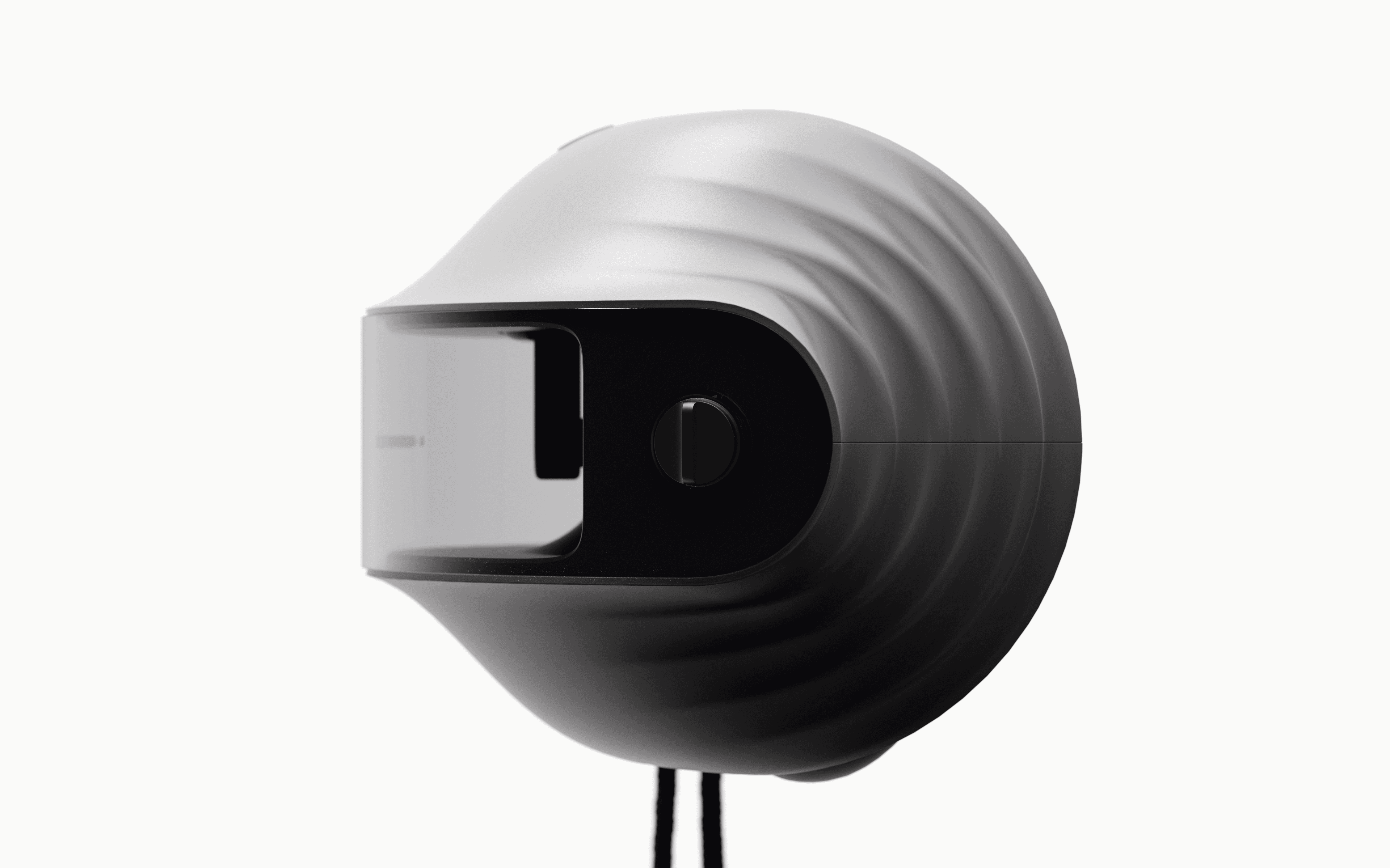
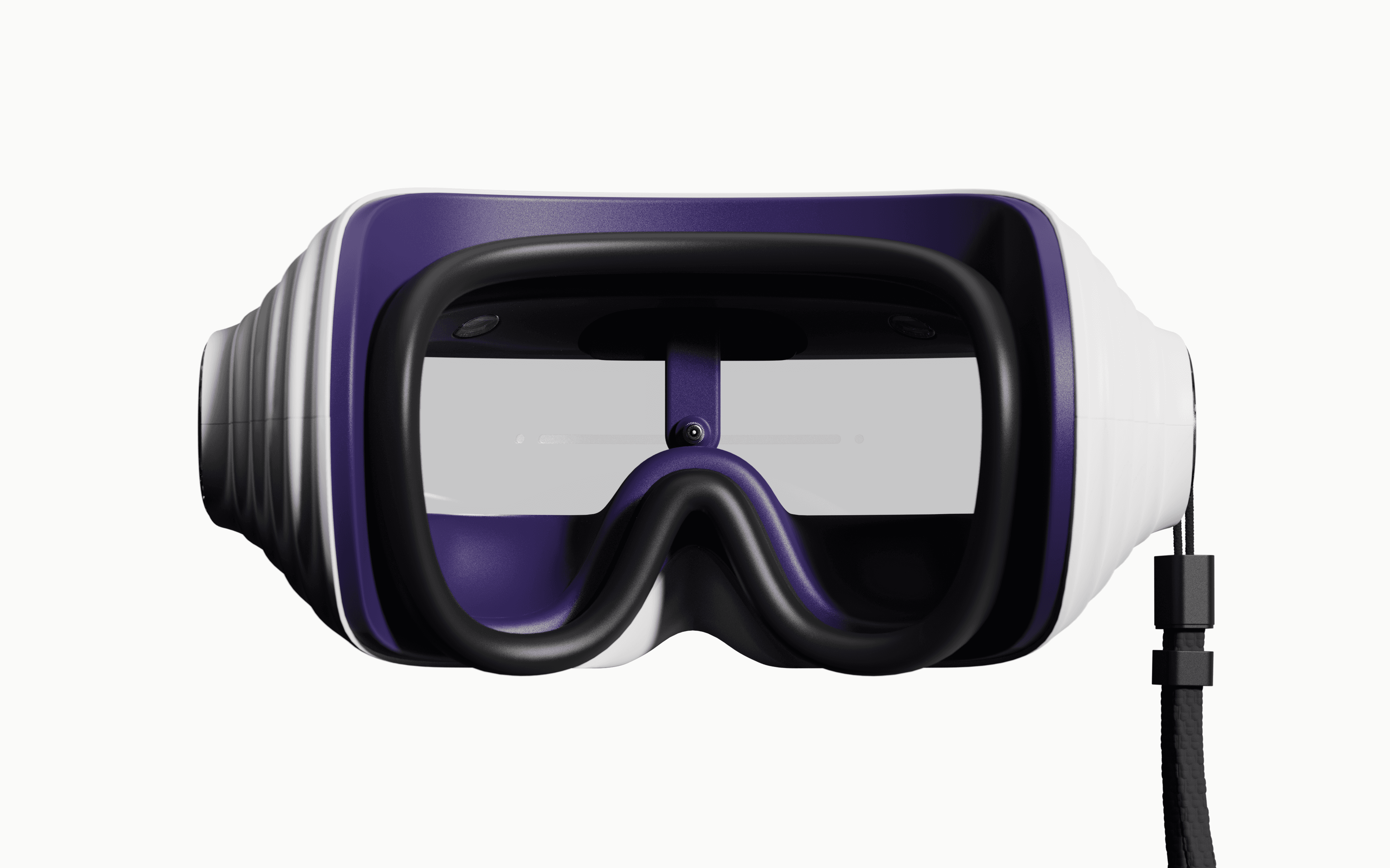
Wearable interface that supports consistent alignment.
Wearable interface that supports consistent alignment.
Wearable interface that supports consistent alignment.
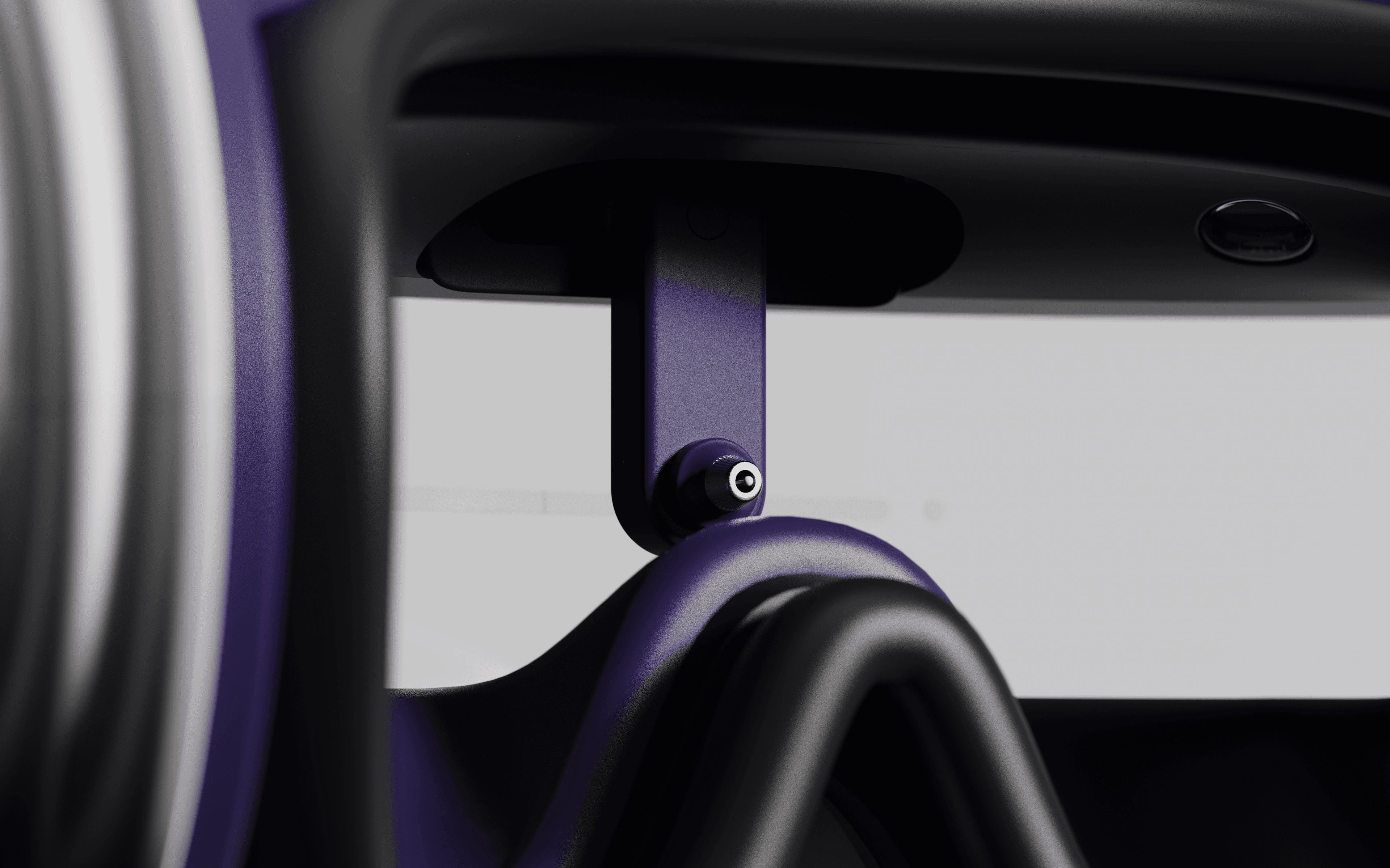
An articulating probe finds the eye, with help from two inner-facing cameras.
An articulating probe finds the eye, with help from two inner-facing cameras.
An articulating probe finds the eye, with help from two inner-facing cameras.
Dial becomes single point of interaction.
Dial becomes single point of interaction.
Status and results are readable by clinician and patient alike.
Status and results are readable by clinician and patient alike.


Adjustable vertical rail (for different heights).
Adjustable vertical rail (for different heights).

Readiness
on the wall.
Readiness
on the wall.
Readiness
on the wall.